South Philly Service
Roof Replacement
Complete roof replacement for South Philadelphia rowhomes and twins. Pitched front roof + flat rear addition handled in a single coordinated project, with L&I permit pulled and inspection scheduled.
Get Matched
Up to 3 vetted contractors will contact you within 24 hours
Roof Replacement: What You Need to Know
Complete roof replacement on a South Philadelphia rowhome usually means two systems on one property: pitched shingles or membrane on the front of the house, and a flat or low-slope roof over the rear addition. Both have to be coordinated, transitions waterproofed correctly, and the work done in a way that doesn't damage party walls or block alley access for neighbors. Contractors who don't work South Philly regularly miss those details.
Philadelphia L&I requires a building permit for full replacement, and the contractor pulls it. On older blocks the existing roof may have been re-covered multiple times, so a proper replacement involves a full tear-off, deck inspection, and any rotted sheathing replaced before underlayment goes down. Skipping the tear-off to save cost is a short-term decision that usually surfaces as a leak within a few seasons.
Spring through early fall is the best window for installation, but storm-damage replacements run year-round. Cold-weather installations are possible with the right adhesive and shingle handling, but require an experienced crew — South Philly's freeze-thaw winters punish a cold-weather mistake faster than most climates.
Why Roof Replacement Goes Right (or Wrong)
Proper Tear-Off, Not a Re-Cover
Quality replacement includes stripping the existing roof to the deck, inspecting sheathing, and replacing rotted boards before underlayment. Re-covering hides problems and shortens the new roof's life.
Flat-Rear and Pitched-Front Coordinated
The two-system South Philly rowhome geometry needs both roofs replaced together, with the transition waterproofed properly. Doing only one half creates a chronic leak point at the junction.
Permit Pulled and Work Inspected
Your contractor files the L&I permit and books the inspection. Unpermitted roofing surfaces at sale time as a title issue — buyers and their inspectors look for the permit history.
Party-Wall and Neighbor Access Handled
Replacement on a rowhome means flashing into a shared wall and often staging material through an adjacent property. Experienced contractors coordinate this with neighbors before the crew arrives, not while a dumpster is blocking the alley.
Is Roof Replacement the Right Call?
Replace, rather than repair, if your roof shows these signs:
- Granule loss visible across more than ~30% of the front shingle surface
- Multiple separate leak locations rather than one isolated issue
- Visible sag in the deck line or daylight visible from inside the attic
- Front shingles over 20 years old with recurring repair callbacks
- Insurance carrier requiring replacement after a storm-damage adjuster report
How the Process Works
Estimate, Material Selection, L&I Permit
Contractor measures, prices the job, walks you through shingle vs. membrane choices for both the front and the rear addition, and files the L&I permit. Lead time on the permit is usually 1–2 weeks.
Tear-Off and Deck Inspection
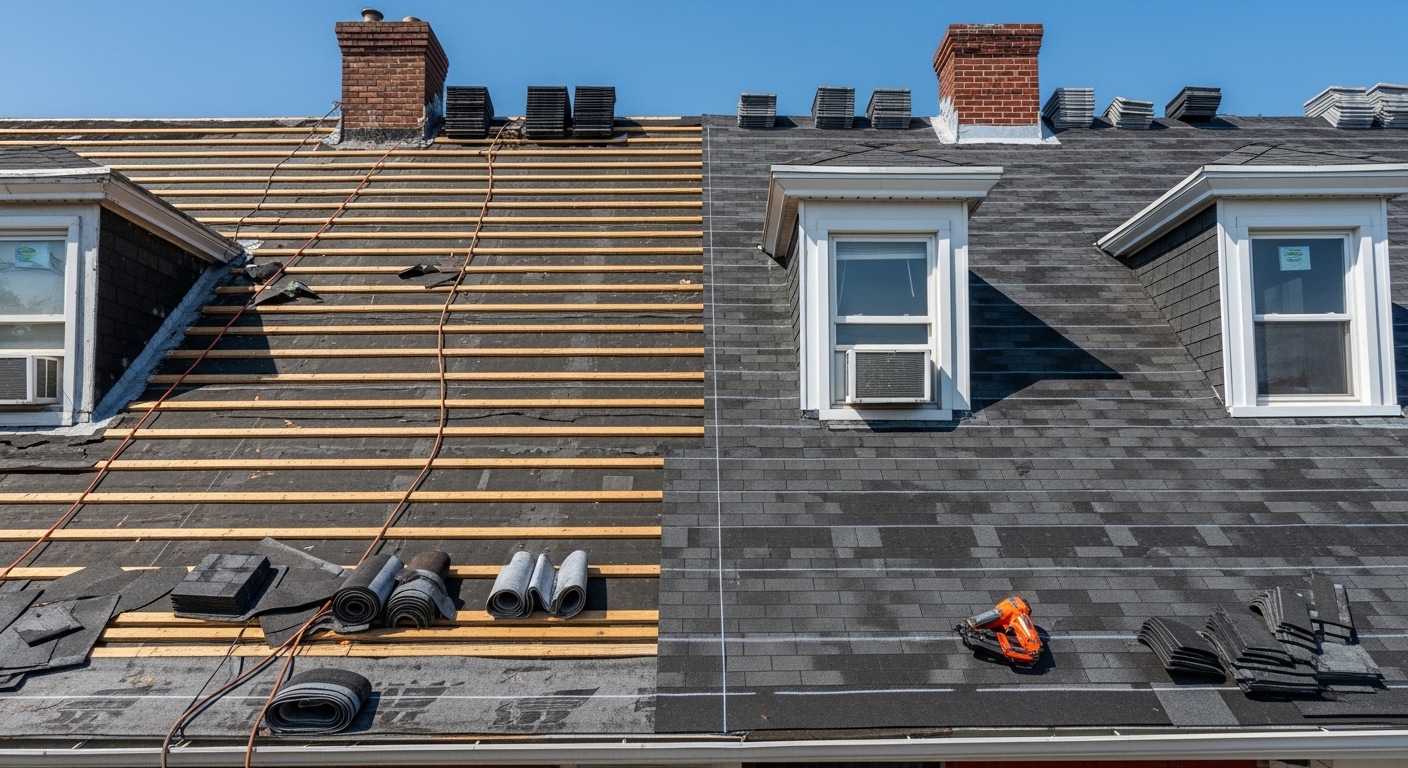
Full removal of the existing roof down to the deck. Rotted sheathing replaced, flashing details around chimneys and party walls inspected. Dumpster placement coordinated with neighbors for narrow blocks.
Underlayment, Flashing, New Roof
Ice-and-water shield on the deck, drip edge, step flashing at walls and chimneys, then the new shingle or membrane system. Front and rear systems installed in the same project for clean transitions.
Final Inspection and Warranty
L&I inspection scheduled and passed before payment closes. Contractor walks the roof with you, hands over manufacturer + workmanship warranties, and explains any maintenance you should do yourself between professional inspections.
Edge Cases and Decision Points
Situations that can change the scope, cost, or timing of a roof replacement job. Worth knowing before you take an estimate.
Hidden deck rot found during tear-off
On any rowhome 80+ years old, expect at least some rotted sheathing under the existing roof — water that's been getting through for a few seasons doesn't show until the cover comes off. Honest estimates allow for 5-10% deck replacement; bigger problems trigger a documented change order before the new roof goes down.
Asbestos in older underlayment
Pre-1980 roofs sometimes used asbestos-containing felt underlayment. If your roof is original to a 1950s-1970s era replacement, the tear-off may need to handle it as asbestos abatement (extra cost and time, ~$1,500-3,500). Most South Philly stock is older and was re-covered before asbestos was common in residential underlayment, but it's worth asking the contractor to flag if they find it.
Adjacent property roof in worse shape than yours
On rowhomes, your flashing is partly into the neighbor's wall. If their roof is failing at the same flashing detail, replacing yours alone leaves the shared point vulnerable. Best case: coordinate with the neighbor to do both at once. Failing that, a more aggressive counter-flashing detail on your side can mostly compensate.
Ice melt cables or snow guards retrofit
If you've had ice dam problems, the replacement is the cheapest time to add heat cables along the front edge or snow guards above any doorway. Adds $400-1,500. Retrofit after the fact costs roughly 2x because shingles have to come up to install properly.
Typical Roof Replacement Projects: Real Examples
Representative scenarios with realistic South Philly pricing and timing. Your specific project will vary based on size, access, and what's found during tear-off.
Standard Passyunk Square rowhome
1,000 sq ft total: ~600 sq ft pitched front + ~400 sq ft flat rear addition. Architectural shingle on the front, EPDM on the rear, new drip edge + flashing, basic chimney pointing if needed. L&I permit + final inspection included.
Graduate Hospital new-build with roof deck
~1,200 sq ft flat-roof installation with deck pavers above. Fully-adhered TPO membrane, tapered polyiso insulation, water-tested before deck panels go back. Coordination required with deck contractor for re-set.
Bella Vista trinity rowhome
Small footprint (~400 sq ft) but three-story height means scaffolding setup is the bigger cost than the material. Architectural shingle, new flashing, parapet wall coping repair if needed. Lime-based mortar used on any 1860s brick touches.
Roof Replacement Pricing Guide
Prices vary depending on property type, material choice, and project scope. Below are typical costs from contractors in our South Philadelphia network. All prices are in USD.
| Service Type | Price Range |
|---|---|
Complete Roof Replacement | $12,000 to $35,000 |
What's Included
- Full material removal, new underlayment, shingles, flashing, gutters, cleanup
- Membrane installation, insulation, drainage systems, warranty
- Leak repair, damaged shingle replacement, flashing repair, minor structural work
- Seamless gutters, downspouts, hangers, end caps, cleanup
- Mortar repointing, crown repair, flashing, waterproofing
- Emergency tarping, structural repair, material replacement, insurance coordination
0% Finance Available
0% financing available through selected contractors. Subject to approval.
Philadelphia Permits and Contractor Requirements
Philadelphia L&I requires a building permit for any roof replacement. Standard residential rowhome roof permit costs $200-400 depending on project value, and your contractor pulls it as part of the job. Unpermitted replacements surface at sale time when buyers' inspectors check the permit history, and force you to either pay for retroactive permitting or discount the home.
Pennsylvania Home Improvement Contractor (HIC) registration with the PA Attorney General is mandatory for any contractor doing more than $5,000 of work — full replacement always qualifies. Contractors should show you their HIC number on their estimate and contract. Anyone working without it is operating illegally under 73 P.S. § 517.1, and you have limited legal recourse if the job goes wrong.
L&I requires a final inspection after the work is complete. The inspector confirms the new roof meets code, including underlayment, ice barrier in the first 24 inches from the eave, proper flashing, and ventilation. Payment shouldn't close until the inspection passes — reputable contractors structure their contracts around this.
Roof Replacement by Neighborhood
Vetted contractors covering 8 South Philly neighborhoods.