
South Philly Service
Chimney Repair
Brick chimney repair and rebuilds for South Philly rowhomes — mortar repointing on century-old brick, crown rebuilds, flashing rework at the roof line, and full rebuilds when the structure is beyond pointing.
Get Matched
Up to 3 vetted contractors will contact you within 24 hours
Chimney Repair: What You Need to Know
A lot of South Philly chimneys are pre-1950 brick, often re-pointed once or twice but never fully rebuilt. They take a beating from freeze-thaw and from rain hitting the windward side, and the typical failure pattern is the same: deteriorated mortar at the crown lets water in, the bricks behind start spalling, and eventually the chimney becomes both a leak source and a structural concern.
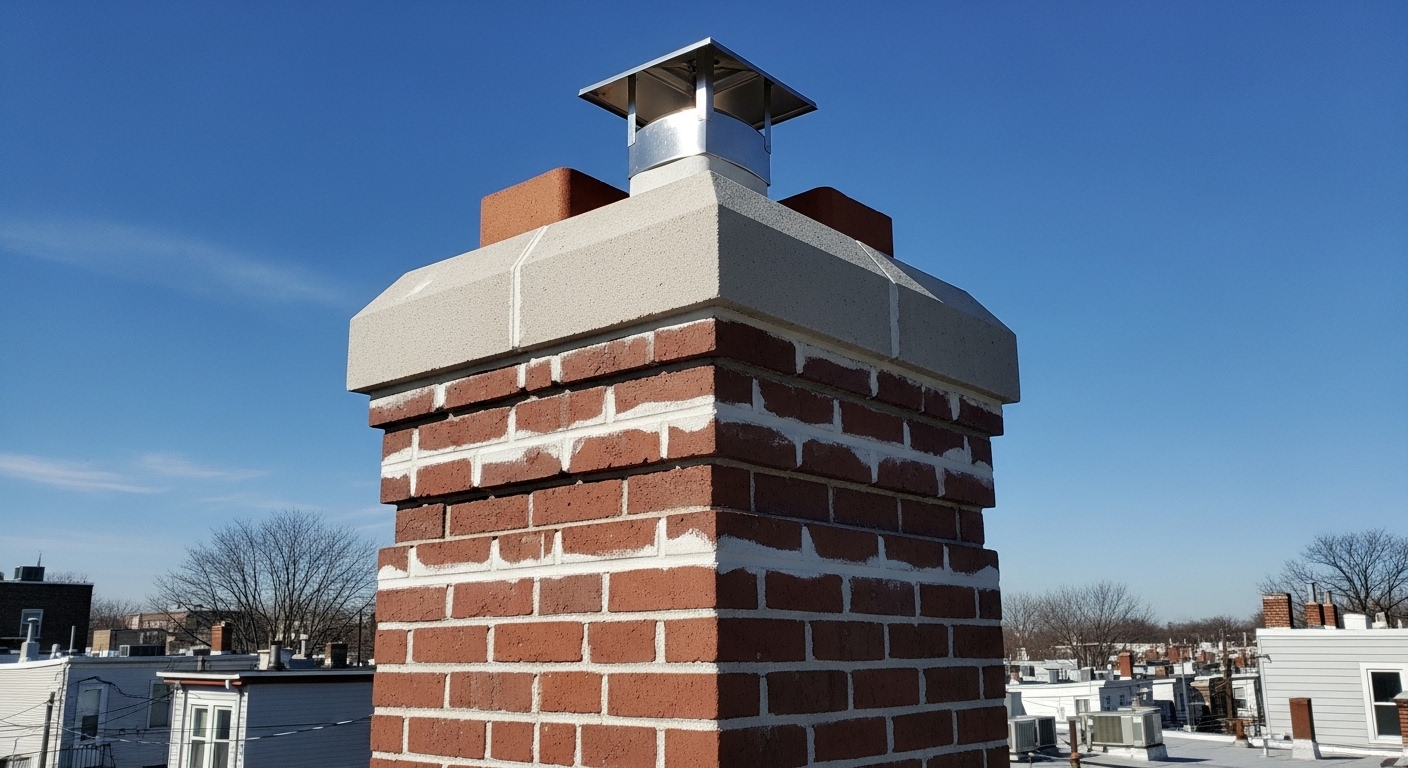
Repair scope depends on how far the damage has progressed. Tuckpointing (replacing the failed mortar joints) handles surface-level decay. A crown rebuild handles the top of the chimney where rainwater pools. A partial or full rebuild is needed when bricks have lost integrity and the chimney is no longer plumb. Skipping straight to a full rebuild is rarely necessary; a competent mason can usually salvage the structure with targeted work.
Chimney flashing at the roof line is its own job. Even a structurally sound chimney leaks if the step flashing has lifted or if a previous roofer caulked over a problem instead of re-flashing it properly. Repairing the chimney without repairing the flashing rarely solves the leak.
Why Chimney Repair Goes Right (or Wrong)
Tuckpointing Before Spalling Sets In
Catching failed mortar joints early — before water gets behind the bricks — is the difference between a few hundred dollars of pointing and several thousand for a partial rebuild. Annual visual inspection from the ground catches most early-stage cases.
Crown Rebuilt Properly
The chimney crown should slope away from the flue and have a proper drip edge. Many older South Philly chimneys have flat or cracked crowns that pool water — a proper rebuild with a concrete crown ends the leak cycle.
Flashing Re-Done at the Roof Line
Step flashing under the shingles + counter-flashing into the chimney mortar joint is the only watertight detail. Caulk over old flashing is a six-month fix at best.
Liner Inspection If You Still Use the Chimney
If the chimney is active for a fireplace, water heater, or boiler, the flue liner should be inspected during repair work. A failed liner is a CO and fire risk; replacement is straightforward when the mason is already on site.
Is Chimney Repair the Right Call?
Get a chimney inspection if you see:
- White efflorescence (chalky deposits) or visible mortar erosion at the crown
- Spalled bricks — flaking faces or visible chunks missing
- Daylight visible between the chimney and the flashing on the roof side
- Interior leak that correlates with rain on the chimney side of the house
- Active fireplace or appliance flue you haven't had inspected in 5+ years
How the Process Works
Inspection and Scope
Mason walks the chimney from the roof, identifies whether the work is tuckpointing, crown rebuild, partial rebuild, or full rebuild. Photos taken to document existing condition for your records.
Stage and Permit If Needed
Scaffolding or ladder access set up. Permit pulled with L&I if the work is structural (rebuilds, not pointing). Roof access coordinated with the roofer if flashing work is in scope.
Mortar, Brick, and Crown Work
Failed mortar raked out and re-pointed with a mix matched to the existing brick; spalled bricks replaced; crown rebuilt with proper slope and drip. Counter-flashing reset into the new mortar joint.
Flashing, Cap, and Sign-Off
Roof-line flashing detailed properly. Chimney cap installed if missing (keeps rain and animals out). Final walk-through and warranty handed over.
Edge Cases and Decision Points
Situations that can change the scope, cost, or timing of a chimney repair job. Worth knowing before you take an estimate.
Pointing vs partial rebuild — when does the decision tip
If the bricks themselves are sound (no spalling, no faces flaking off) and only the mortar joints have failed, tuckpointing is enough. If the bricks have started losing material or the chimney is visibly leaning, you've crossed into partial rebuild territory. A mason walking the chimney can tell within 5 minutes which side of the line you're on; pictures from the ground usually can't.
Active flue means CO safety inspection alongside repair
If the chimney is currently active for a fireplace, water heater, or gas boiler, the work isn't just masonry — the flue liner needs to be inspected for cracks, gaps, or carbon monoxide leak risk. NFPA 211 covers inspection standards. A mason doing structural work without checking the flue is leaving a CO risk unaddressed.
Lime mortar required for historic brick (Bella Vista, Queen Village)
Bricks made before ~1900 are softer than modern brick and need a softer (lime-based) mortar to avoid spalling under freeze-thaw. Modern Portland-cement mortar on 1860s brick will crack the bricks themselves within a few seasons. A mason who doesn't know to ask about brick age and use lime mortar is going to damage historic stock.
Lead vs aluminum flashing compatibility
Older South Philly chimneys often have original lead flashing. If a previous roofer added aluminum flashing alongside the lead, you can get galvanic corrosion at the contact point and water entry within a few years. Proper repair uses compatible materials throughout — either all lead or all aluminum, with appropriate separators if mixed.
Typical Chimney Repair Projects: Real Examples
Representative scenarios with realistic South Philly pricing and timing. Your specific project will vary based on size, access, and what's found during tear-off.
Standard tuckpointing on an exposed chimney
Failed mortar joints raked out and re-pointed, matching mortar mix to existing brick. Scaffolding setup, ground-level material staging. No structural work; standard for a chimney that's at the early-decay stage.
Crown rebuild only
Existing cracked or flat crown removed, replaced with a properly-sloped concrete crown with drip edge. Often paired with chimney cap install for ~$150 more. Most common stand-alone chimney repair.
Partial chimney rebuild + flashing rework
Top 3-6 courses of brick rebuilt with matching material, crown rebuilt, counter-flashing reset into new mortar, lead step flashing replaced if needed. Common when spalling is visible but the lower chimney is sound. L&I permit pulled for structural work.
Chimney Repair Pricing Guide
Prices vary depending on property type, material choice, and project scope. Below are typical costs from contractors in our South Philadelphia network. All prices are in USD.
| Service Type | Price Range |
|---|---|
Chimney Repair | $800 to $8,000 |
What's Included
- Full material removal, new underlayment, shingles, flashing, gutters, cleanup
- Membrane installation, insulation, drainage systems, warranty
- Leak repair, damaged shingle replacement, flashing repair, minor structural work
- Seamless gutters, downspouts, hangers, end caps, cleanup
- Mortar repointing, crown repair, flashing, waterproofing
- Emergency tarping, structural repair, material replacement, insurance coordination
0% Finance Available
0% financing available through selected contractors. Subject to approval.
Chimney Permits and Safety Inspection
Tuckpointing alone usually doesn't require a Philadelphia L&I permit — it's considered maintenance, not structural work. Crown rebuilds and full or partial chimney rebuilds do require a permit because they alter the structural element. Your mason should pull it.
If the chimney is active (fireplace, gas water heater, or boiler venting through it), NFPA 211 standards recommend annual inspection and any masonry work should include a flue inspection. Carbon monoxide risk from a failed flue is a serious safety issue, not just a maintenance concern.
Pennsylvania HIC registration applies for work over $5,000 — partial and full rebuilds usually qualify; pointing-only and crown-only jobs often don't. Reputable masons are HIC-registered regardless of job size.
Chimney Repair by Neighborhood
Vetted contractors covering 8 South Philly neighborhoods.