
South Philly Service
Flat Roofing
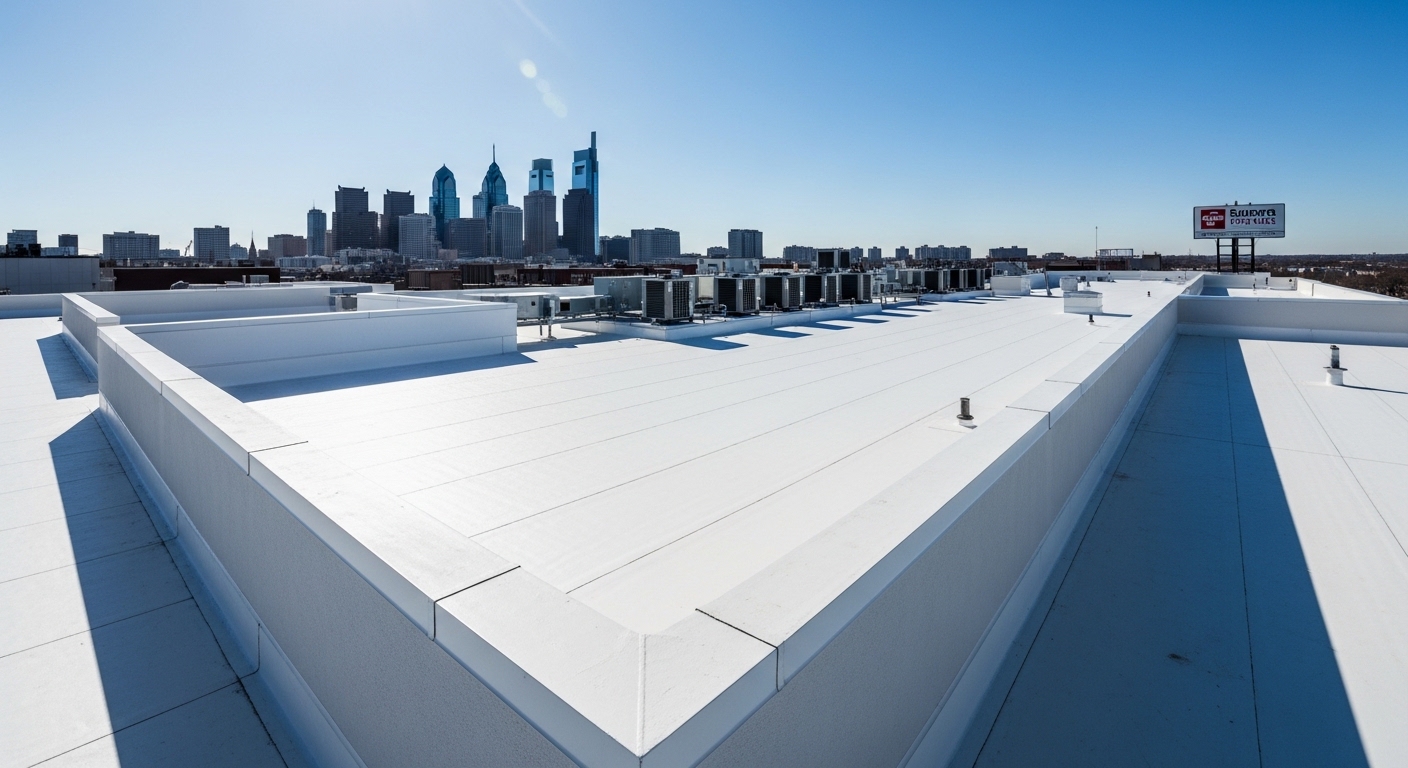
Specialized flat and low-slope roofing for South Philly rear additions and converted properties. TPO and EPDM membrane installation with proper drainage, parapet flashing, and waterproofing details.
Get Matched
Up to 3 vetted contractors will contact you within 24 hours
Flat Roofing: What You Need to Know
Flat and low-slope roofs are everywhere in South Philly — they sit over almost every rear addition and quite a few commercial conversions. They also cause most of the leaks. The original built-up or modified-bitumen systems on older properties were sound when installed, but 25–40 years of freeze-thaw, ponding, and patches have left a lot of them at end of life. A proper flat-roof install fixes the underlying drainage, not just the membrane.
Two membrane systems dominate current installations: EPDM (a black rubber membrane, durable and forgiving of detail work) and TPO (a white heat-welded membrane that reflects more solar load). Both will outlast modified bitumen by a wide margin when installed correctly with proper insulation, slope to a working drain, and waterproofed parapet walls. The choice between them is mostly about price, aesthetics, and whether reducing summer cooling load matters to you.
Most South Philly flat-roof failures happen at the parapet-wall transitions and the drain or scupper — not in the middle of the membrane. An experienced contractor pays more attention to those details than to the open field, because that's where water gets behind the system and into your ceiling.
Why Flat Roofing Goes Right (or Wrong)
Proper Slope to a Working Drain
Flat roofs aren't actually flat — they need positive slope to a scupper or internal drain. A new system corrects whatever ponding the old roof had, which is the single biggest predictor of membrane lifespan.
Parapet Walls Waterproofed Correctly
Most rowhome flat-roof leaks come from failed parapet flashing, not the field. New installation includes counter-flashing into the brick coping and a proper termination bar — details that cheap installs skip and that produce ceiling leaks within a year.
Membrane Matched to the Building
TPO reflects summer heat (better if your top-floor bedroom bakes); EPDM is more forgiving to install around complex details and cheaper. Contractor walks the trade-off for your specific roof and budget.
Insulation Done Right Under the Membrane
New flat-roof installs include tapered polyiso insulation for slope and R-value. Skipping this is a leading cause of ice dam damage on rowhouse rear additions during a hard winter.
Is Flat Roofing the Right Call?
Flat-roof replacement (vs. patching) makes sense when:
- Multiple leaks within a year, or a known failed seam you keep re-tarring
- Visible ponding water that doesn't drain after a heavy rain
- Existing membrane is 20+ years old or has been patched more than twice
- Insulation is wet (soft spots underfoot when walking the roof)
- Parapet wall coping is cracked or the flashing has pulled away from the brick
How the Process Works
Inspection, Tear-Off Scope, Quote
Walk the existing roof, identify whether the insulation needs to come up (usually yes if it's wet), and price the tear-off + reinstall scope. L&I permit filed for replacement-level work.
Strip and Inspect the Deck
Existing membrane and any wet insulation removed. Deck inspected for rot, fasteners checked, parapet wall caps assessed. This is the right time to add drains or scuppers if drainage is currently inadequate.
Insulation, Membrane, Flashing
Tapered polyiso laid for slope, membrane installed (TPO heat-welded or EPDM adhered/mechanically fastened), then proper flashing detail at parapets, drains, vents, and chimneys.
Water Test and Sign-Off
Walk the finished roof, flood-test or hose-test the drains and seams, address any defects, and pass L&I inspection. Workmanship warranty handed over with care guidance.
Edge Cases and Decision Points
Situations that can change the scope, cost, or timing of a flat roofing job. Worth knowing before you take an estimate.
Wet insulation discovered during tear-off
If you walk the existing roof and feel soft spots, the insulation under the membrane is saturated. Saturated polyiso has no R-value and adds dramatic weight to the deck. The right call is full removal down to the deck — half-measures (cover board over wet insulation) trap the moisture and accelerate deck rot. Adds ~$2-4/sq ft to the project.
Drain or scupper needs adding
Original South Philly flat roofs often drain only through one undersized scupper at the back, which is why they pond. Adding a second scupper or installing an internal drain during replacement adds $400-1,200 but dramatically extends membrane life. Skipping it means the new roof ponds in the same spots and fails early.
Parapet wall coping needs rebuilding
Cracked or missing parapet wall coping (the brick or stone cap on top of the wall) lets water down into the wall and the membrane edge. A proper flat-roof replacement includes inspecting the coping; if it's failed, rebuild adds $30-60 per linear foot. Cheaper to do during the membrane work than as a separate project later.
Roof-mounted HVAC or solar in the way
Condensers, vent stacks, or solar arrays on the rear addition complicate membrane installation — termination details around every penetration need careful flashing. Solar removal and re-set is often a separate trade ($500-2,000 round trip). Plan it in before the membrane crew arrives.
Typical Flat Roofing Projects: Real Examples
Representative scenarios with realistic South Philly pricing and timing. Your specific project will vary based on size, access, and what's found during tear-off.
Standard rear addition replacement
~400 sq ft EPDM rubber, fully-adhered or mechanically fastened, new tapered polyiso insulation, parapet wall counter-flashing redone. One scupper, no major detail complications.
Larger flat roof with new drain
~800 sq ft TPO heat-welded, tapered insulation, new internal drain added to address chronic ponding, parapet wall coping repointed where needed.
TPO vs EPDM cost difference
TPO premium pays for itself in cooling cost savings (~$80-200/year on a 800 sq ft rear addition) over ~10-15 years. Pick TPO if your top-floor bedroom bakes in summer; EPDM if cost is the deciding factor and the building's already well-insulated.
Flat Roofing Pricing Guide
Prices vary depending on property type, material choice, and project scope. Below are typical costs from contractors in our South Philadelphia network. All prices are in USD.
| Service Type | Price Range |
|---|---|
Flat Roof Installation | $8,000 to $18,000 |
What's Included
- Full material removal, new underlayment, shingles, flashing, gutters, cleanup
- Membrane installation, insulation, drainage systems, warranty
- Leak repair, damaged shingle replacement, flashing repair, minor structural work
- Seamless gutters, downspouts, hangers, end caps, cleanup
- Mortar repointing, crown repair, flashing, waterproofing
- Emergency tarping, structural repair, material replacement, insurance coordination
0% Finance Available
0% financing available through selected contractors. Subject to approval.
Permits and Insulation Code
Flat-roof replacement requires a Philadelphia L&I building permit, same as any roof replacement. Permit cost runs $150-300 depending on project value. Your contractor pulls it as part of the job.
Pennsylvania's residential energy code (currently the 2018 IECC adopted with PA amendments) requires a minimum R-20 of insulation in low-slope roof assemblies above conditioned space. Older South Philly rear additions often have R-5 or less; replacement is the right time to bring the assembly to code. Most contractors plan for R-20 by default; if your contractor's spec sheet says less, ask why.
PA HIC registration applies if the job is over $5,000 (any meaningful rear-addition replacement). Contractor's HIC number should appear on the estimate and contract.
Flat Roofing by Neighborhood
Vetted contractors covering 8 South Philly neighborhoods.